From the people who grew them

How to cook fresh Lion's Mane and oyster mushrooms

We grow these on our farm in New Smyrna and hand them to you at the farmers market, because fresh mushrooms are pickup only and we never ship them. If you just brought some home, this is how to cook them so they taste the way they should. Browned, meaty, never soggy. No special equipment and no restaurant tricks.

Almost every mushroom problem in a home kitchen comes down to trapped water. Get the water out first and the rest takes care of itself.

Why mushrooms come out spongy

Most people cook mushrooms the way they cook everything else. Oil into the pan, heat it up, mushrooms in. That first step is the whole problem. Fresh mushrooms are about ninety percent water, and oil added early seals that water inside them. They then steam in their own moisture and arrive at the table squeaky and spongy instead of browned.

The fix is dry heat first. Cook them with no fat at all until the water has left the pan, and only then add the fat. That one change is most of the difference between mushrooms people love and mushrooms people tolerate.

The dry-sauté, start to finish

A wide skillet, cast iron or stainless if you have it, and a little patience. Nothing else.

  • Prep first. Shred, tear, or slice the mushrooms, and trim off any substrate still stuck to the base.
  • Heat the pan before anything goes in. Medium-high, and no oil yet.
  • Add the mushrooms dry, in a single layer. Space between the pieces is not optional. Crowded mushrooms steam each other. Two batches beat one crowded pan every time.
  • Let the water come out and cook off. They shrink and release liquid, that liquid evaporates, and the flavor concentrates as it goes. You will hear the pan go quiet and then start to sizzle again. That is your cue.
  • Wait for the sear. Keep going until the outsides take a light golden brown. Figure five to ten minutes at this stage.
  • Now add the fat and the seasoning. Butter or oil goes in after the water is gone, so it fries the mushrooms instead of boiling them. Another five to ten minutes finishes them.
  • Salt near the end. Salt early pulls water back out and stalls the browning.

Cook them longer than feels natural. Undercooked mushrooms are squeaky and bland, fully cooked ones are golden and savory. When in doubt, give them another minute.

Pressing, for a meatier texture

To push the texture further, press them while they cook. Set something heavy on top, a second cast iron skillet or a sturdy spatula leaned on hard, and it drives out moisture the pan cannot reach on its own. What you get back is denser and meatier.

This is worth doing with Lion's Mane in particular. Press it, sear one side properly, then flip it and sear the other.

Fresh Lion's Mane

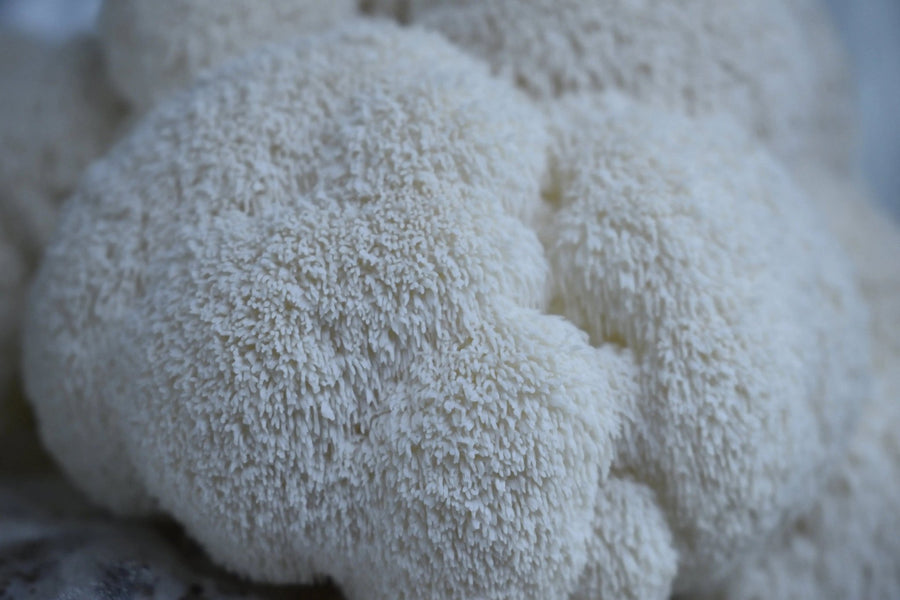
Treat Lion's Mane like a piece of seafood or a steak, not like a button mushroom. It is dense and meaty, and seared properly it pulls apart into tender strands with a texture people compare to crab or lobster.

Two ways to start:

  • Sliced into steaks. Cut the cluster into slabs about half an inch thick, dry-sauté both sides, press for a deep golden crust, then finish with a little butter. Garlic, lemon, and black pepper suit it well.
  • Pulled into shreds. Tear the cluster into bite-size pieces, dry-sauté until the edges crisp, then add the fat. This is the version that goes into cakes, scampi, tacos, or a sandwich.

Lion's Mane holds up to firm handling and longer cooking, so it is forgiving. The one thing it does not forgive is being rushed or crowded.

Oysters, Pioppino, and the rest

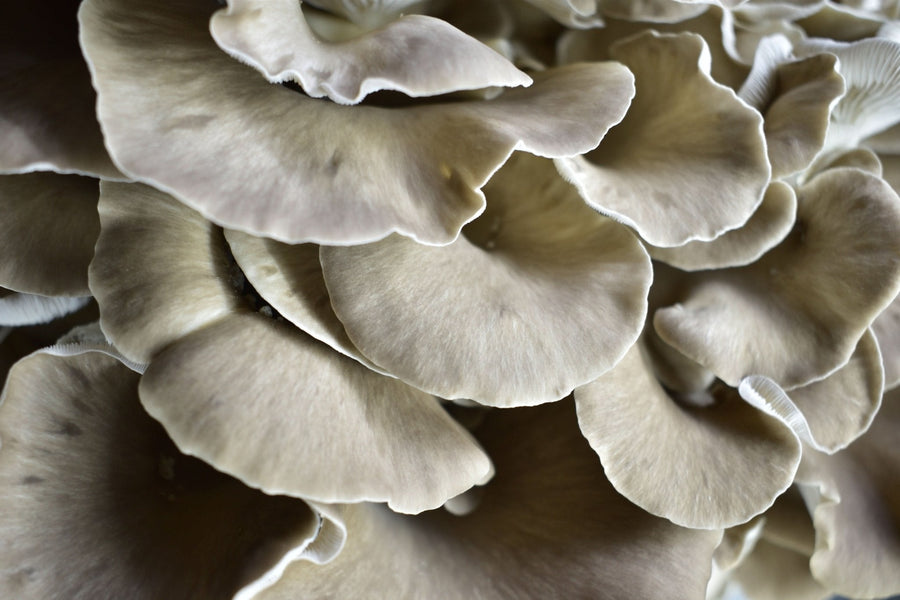
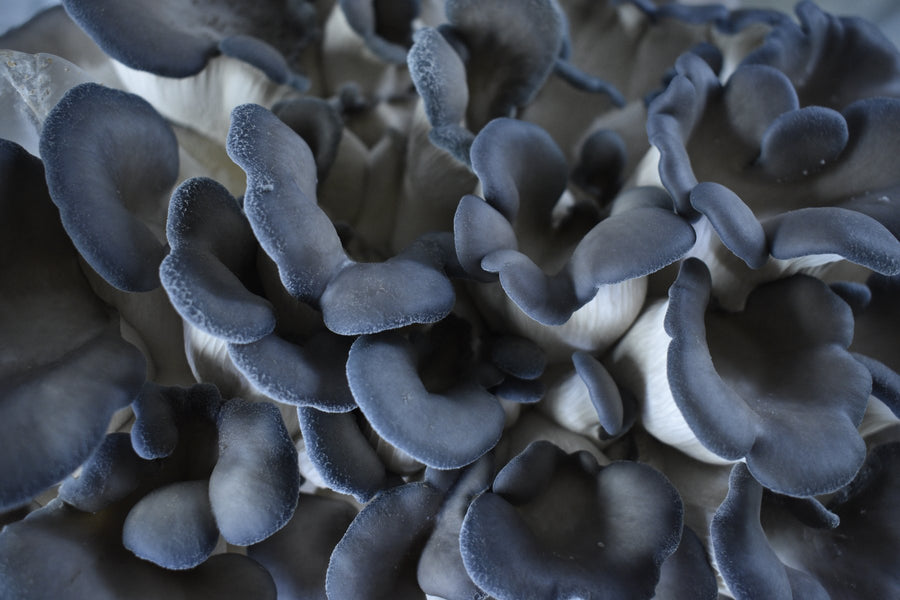
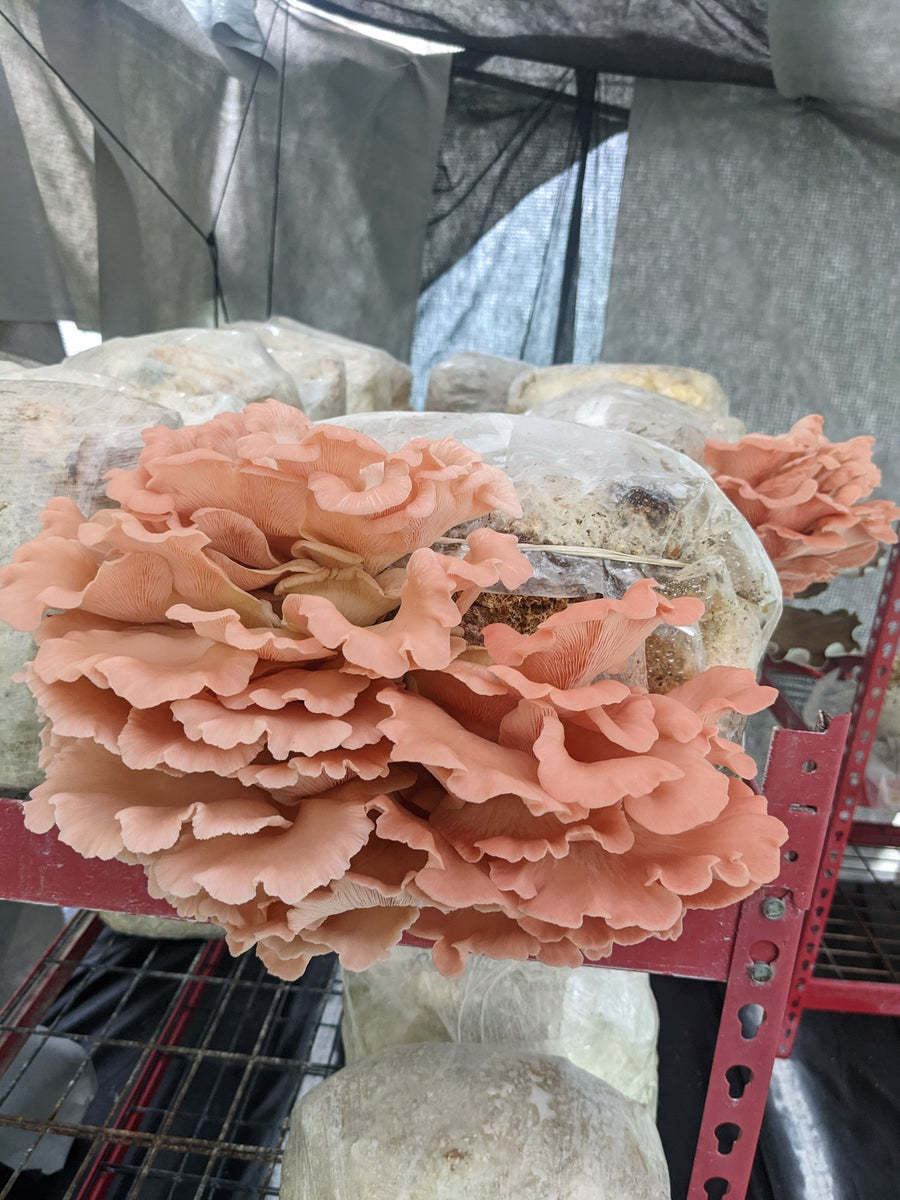
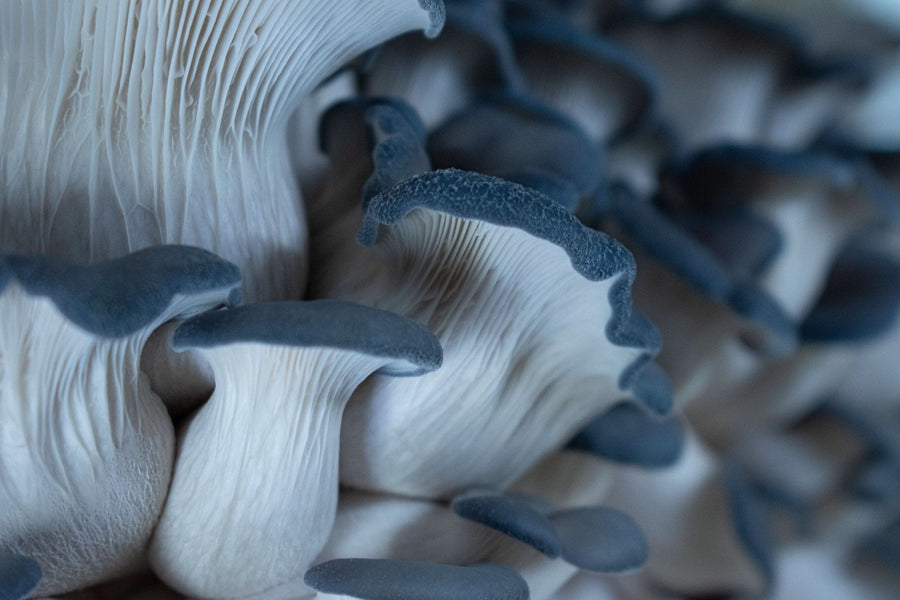
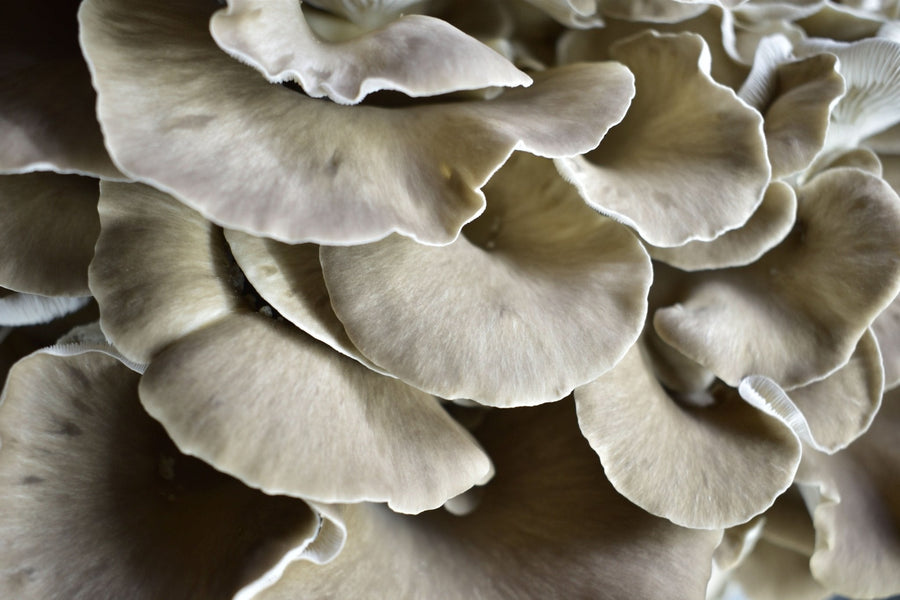
The oysters we grow, blue and pink and Italian brown, are thinner and more delicate than Lion's Mane and they cook fast. High heat and a quick sear is all they need.

  • Tear them into individual petals or strips along the grain rather than chopping across.
  • Get the pan hot, dry-sauté briefly, then add the fat and let the edges crisp.
  • They are at their best in stir-fries, on tacos, roasted on a sheet pan until the edges brown, or crisped up as a topping.

Because they cook so quickly, oysters go from perfect to overdone faster than Lion's Mane does, so keep them moving once the fat goes in. Pioppino has long, firm stems, so give it a bit more time in the dry pan. A Chef Mix is best cooked all together in one pan, which is rather the point of it.

What people get wrong

  • Soaking them under the tap. Mushrooms are sponges. Left sitting in water they soak it up and never brown. Brush off any debris, or rinse fast and pat dry.
  • Crowding the pan. Worth saying twice. It is the single most common reason home-cooked mushrooms go soggy.
  • Adding fat and salt too early. Both keep the mushrooms wet for longer. They come after the water is gone, not before.
  • Undercooking. Mushrooms are one food that is better cooked all the way through. Give them the time.
  • Storing them wrong before you even start. Sealed plastic and trapped moisture turn fresh mushrooms slimy before they ever reach the stove. How to store fresh mushrooms covers that end of it.

Then pick something to make

Once the technique is second nature the recipe matters a lot less, but it still helps to have somewhere to start. Our recipes page has what we have written up so far, and we add to it as we go.

Fresh mushrooms are pickup only, at the local farmers market. We do not ship fresh mushrooms. Please don't order these for delivery. Come pick them up from us in person.

Storage

Keep them fresh

What kills mushrooms fastest is moisture, so keep them on the drier side. A paper bag in the fridge, never sealed plastic. If they do dry out on you, don't toss them, they're perfect for soup.

How to keep fresh mushrooms

Box of freshly harvested grey, blue and yellow oyster mushrooms, Florida Shroom King